
A major controversy has erupted in world football after the Union of European Football Associations (UEFA) strongly criticized FIFA’s decision to suspend the automatic one-match ban of United States striker Folarin Balogun, a move reportedly made after US President Donald Trump intervened.
UEFA described FIFA’s decision as “crossing a red line,” warning that political interference threatens the integrity and credibility of football.
In a strongly worded statement, UEFA said that an automatic suspension following a red card is not an optional disciplinary measure but a fundamental rule clearly established in football regulations.
“The automatic one-match suspension after a red card requires no discretionary decision by any authority. It is a basic principle of the Laws of the Game and leaves no room for exceptions,” UEFA said.
The European governing body called FIFA’s move “extraordinary, incomprehensible and unjustified,” expressing shock over the decision to lift Balogun’s suspension during the FIFA World Cup.
According to UEFA, if the organizations responsible for enforcing football’s rules fail to protect them, the sport’s fairness and credibility are placed at risk.
The governing body also warned that such a decision sets a dangerous precedent, making it difficult to justify different treatment in future disciplinary cases.
Sepp Blatter: “Red Cards Are Not Overturned by Political Phone Calls”
Former FIFA president Sepp Blatter also weighed in, criticizing what he described as political influence in football.
Writing on X, Blatter said football must never become “a playground for political power.”
“Red cards are not overturned by political phone calls. They are overturned through rules, evidence and independent judicial bodies. If a US president calls the FIFA president and a player is cleared before a knockout match, serious questions must be asked. FIFA, where are you heading?”
Trump Requested Review of Balogun’s Ban
The controversy stems from Balogun’s red card during the United States’ Round of 32 FIFA World Cup match against Bosnia and Herzegovina on July 2.
Under FIFA regulations, the dismissal triggered an automatic one-match suspension, meaning the American striker—one of the team’s leading scorers—would miss the crucial Round of 16 clash against Belgium on July 7.
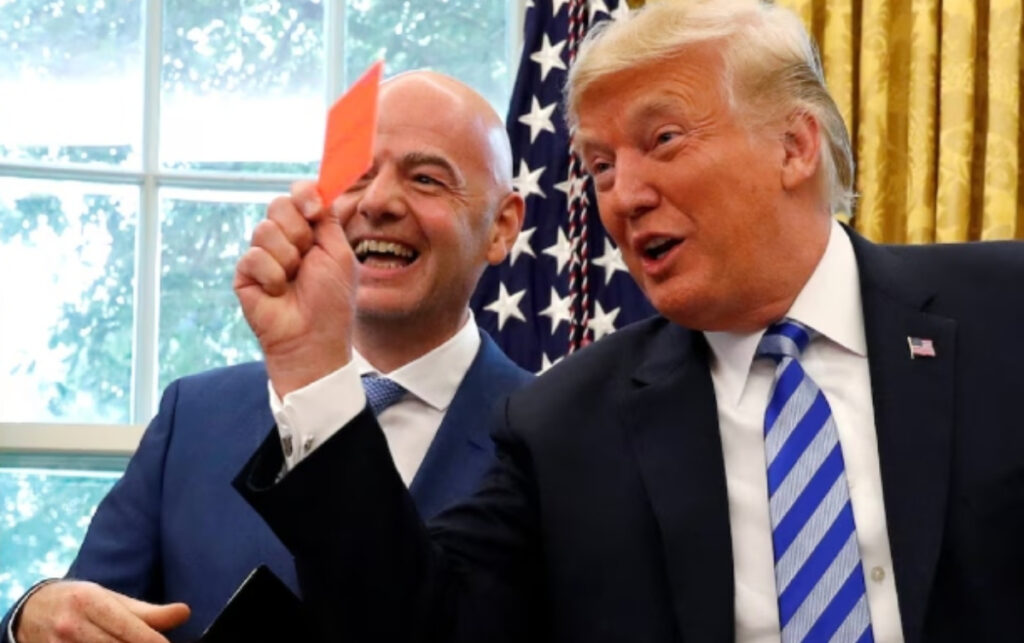
However, according to international media reports, President Donald Trump contacted FIFA president Gianni Infantino, requesting that the decision be reconsidered.
Soon afterward, FIFA suspended the enforcement of Balogun’s one-match ban for one year, making him eligible to face Belgium.
Trump later welcomed FIFA’s decision on social media, thanking the governing body for reversing what he described as “a major injustice.”
British media, citing CBS News, reported that the disciplinary reversal came shortly after Trump’s telephone conversation with Infantino.
Belgium Considering Legal Action
The Belgian Football Association said it was surprised by FIFA’s decision and confirmed it is examining legal options.
Belgium’s foreign minister also questioned the ruling, saying that if a single phone call influenced an independent disciplinary process, it would amount to a serious violation of football’s governing principles.
Trump Confirms Contact With FIFA
Speaking at the White House on Monday, Trump acknowledged that he had asked FIFA to review the decision because, in his view, Balogun had not committed a foul deserving of a red card.
Trump insisted he did not explicitly ask for the suspension to be removed.
“I simply asked them to take another look at it,” he said, adding that he believed the referee had made an incorrect decision.
The US president also suggested that the Brazilian referee’s red-card decision was questionable.
Infantino Defends FIFA’s Independence
Responding to the growing criticism, FIFA president Gianni Infantino confirmed receiving Trump’s call but stressed that Balogun’s case was handled by FIFA’s independent judicial bodies.
Infantino said FIFA’s disciplinary committees operate independently and make decisions solely on the basis of football regulations and evidence.
“I respect the independence of FIFA’s judicial bodies,” Infantino said. “Sometimes I agree with their decisions, sometimes I am surprised, and sometimes I disagree—but I always respect their independence.”
He added that receiving calls from heads of state, government officials and football stakeholders is a routine part of his role, but insisted such communications do not determine disciplinary outcomes.
The dispute has reignited debate over the independence of football governance, with UEFA warning that any perception of political influence could undermine trust in the sport’s disciplinary system worldwide.