
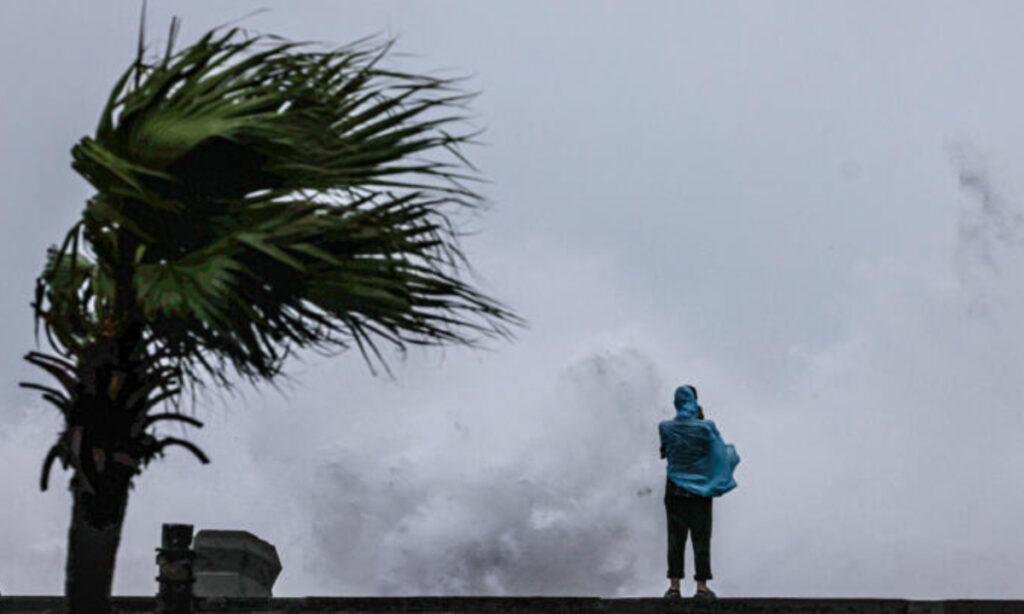
Typhoon Bavi weakened into a severe tropical storm on Sunday after making landfall in eastern China, where authorities evacuated nearly 1.72 million people ahead of its arrival. No immediate casualties were reported, but the storm brought destructive winds, torrential rain, and widespread disruption across Zhejiang province.
Bavi first struck Yuhuan in Zhejiang province at around 11:20 p.m. local time on Saturday, packing maximum sustained winds of 144 km/h (90 mph), according to China’s meteorological authorities.
State broadcaster CCTV reported that the storm’s core impact zone experienced violent winds and heavy rainfall, causing rapid surface flooding and uprooting roadside trees. After making its initial landfall, Bavi moved inland and hit the nearby city of Yueqing, where firefighters, rescue teams, and municipal workers cleared more than 1,300 fallen or uprooted trees.
By Sunday morning, the storm had weakened as its eye moved near Hangzhou, the provincial capital, with sustained winds dropping to around 108 km/h, prompting officials to downgrade it to a severe tropical storm.
Authorities warned that heavy rainfall could continue across Zhejiang’s coastal areas, raising the risk of flash floods, overflowing rivers, transport disruptions, and damage to farmland.
Before reaching mainland China, Bavi battered northern Taiwan and Japan’s southwestern island chain, knocking down trees and leaving tens of thousands of households without electricity.
The latest storm comes after a week of extreme weather across southern and central China, where flooding and severe storms have already claimed at least 39 lives, caused dozens of rivers to overflow, and triggered the collapse of a reservoir, underscoring the country’s challenging monsoon season.
Chinese authorities have mobilized emergency response teams and continue to monitor the storm as it moves inland, urging residents in vulnerable areas to remain alert for flooding and landslides.