
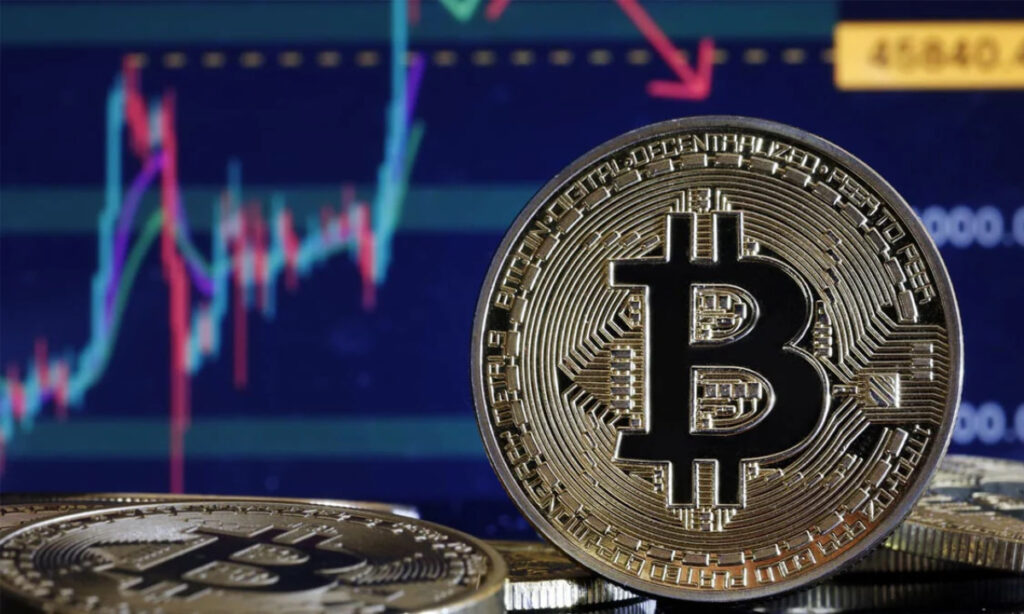
Bitcoin and the broader cryptocurrency market came under renewed selling pressure on Monday as escalating geopolitical tensions between the United States and Iran prompted investors to move away from riskier assets and seek safer investments.
The world’s largest cryptocurrency briefly climbed above $64,250 during intraday trading but failed to hold its gains as risk sentiment deteriorated. Bitcoin was trading around 0.65% lower over the past 24 hours, extending its weekly decline to nearly 2%, while most major altcoins also slipped.
The latest market volatility follows renewed military tensions in the Middle East, raising fears of prolonged instability around the Strait of Hormuz—a critical global oil shipping route that handles roughly one-fifth of the world’s seaborne crude exports. The growing uncertainty has sent energy markets soaring, with Brent crude and West Texas Intermediate (WTI) crude both rising more than 4%.
Higher oil prices have also intensified concerns over global inflation, strengthening the US dollar and government bond yields. Such conditions typically reduce investor appetite for speculative assets, including cryptocurrencies.
Although Bitcoin is often promoted as a hedge against geopolitical uncertainty, recent market movements suggest it continues to behave more like a high-risk asset, reacting negatively to macroeconomic shocks and tightening financial conditions.
From a technical perspective, analysts say $60,000 remains Bitcoin’s most important support level. A sustained move below that threshold could trigger another wave of selling, potentially dragging prices toward $57,000. On the upside, bulls must reclaim and close above $65,000 to revive bullish momentum.
Market strategists believe three key factors are currently weighing on cryptocurrencies: escalating Middle East tensions, expectations of a mid-cycle correction following Bitcoin’s halving, and continued investor preference for AI-related stocks and other traditional growth assets over digital currencies. Until geopolitical risks ease and macroeconomic conditions improve, analysts expect crypto markets to remain highly volatile.